
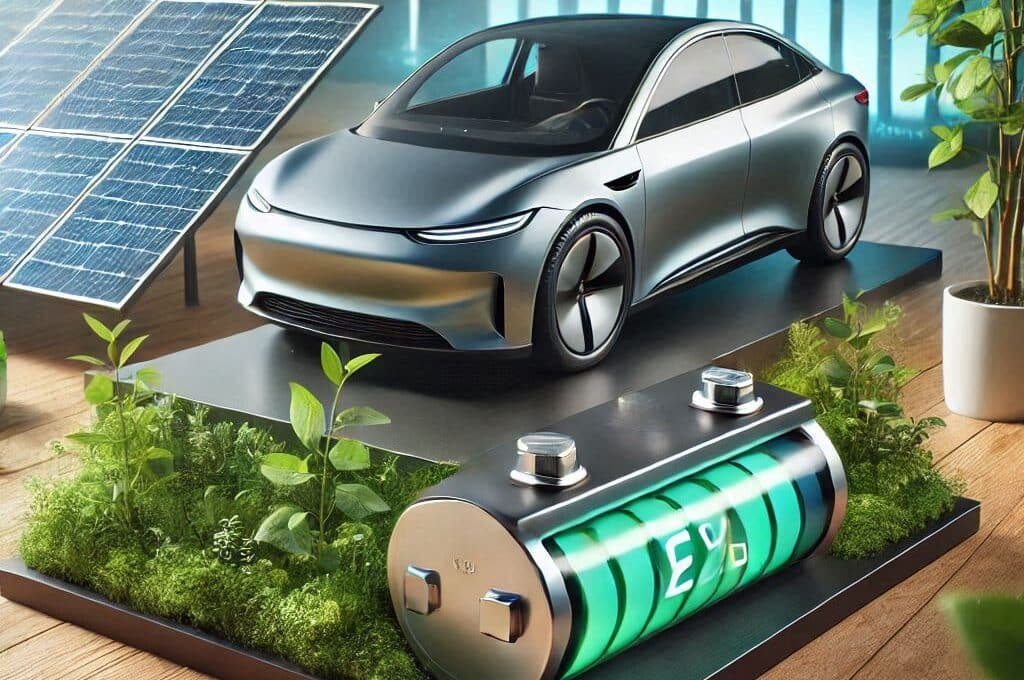
Electric vehicles (EVs) are revolutionizing the automotive industry, and at the heart of this transformation lies the electric car battery. This critical component stores and supplies the energy needed to power the electric motor, making it a fundamental aspect of EV performance, range, and efficiency. In this article, we’ll delve into the intricate workings of electric car batteries, exploring their composition, operation, and the technologies that make them essential for sustainable transportation.
The Basics of Electric Car Batteries
An EV battery is quite similar to a phone or laptop battery in that it is a rechargeable energy storage system that powers the electric motor of the vehicle. The current trend of electric vehicles runs on lithium-ion batteries. However, these are smaller, less powerful, and non-customer-oriented ones, though logically fundamentally the same lithium-ion battery technology is used in mobile phones and laptops, the power sources in EVs are larger, more powerful and specially engineered for automotive applications.
Key Components of an Electric Car Battery
Cells:Lithium-ion battery has several cells, and each of them includes: Cathode: The positive electrode, most often made of a lithium-based compound. Lithium ion is transferred from the cathode to the anode through the electrolyte. The battery is given energy in the form of a chemical reaction, which is how this process goes on.
Cathode: The positive electrode, mostly a lithium-based compound, is generally made.
Anode: The negative electrode, most probably made of graphite, is generally anode.
Electrolyte: A liquid or gel, which allows the movement of lithium ions from one electrode to the other, is called electrolyte.
Separator: Very thin membrane that keeps the electrodes from contacting each other and at the same time allows the ions to flow.
Modules and Packs:Modules include cells, and a battery pack is made up of different modules. Besides the pack, there are also the cooling systems, the safety measures, and the battery management system (BMS).
Battery Management System (BMS):The BMS keeps an eye on and controls battery performance thus, safety, efficiency, and longevity are ensured. Charging and discharging regulation, overheating prevention are some of the roles that the BMS performs and also the cells are balanced to make performance uniform.
How Electric Car Batteries Work
Electric car batteries are run by the principle of electrochemical energy conversion, which is an energy conversion from chemical to electrical one. The battery is operating such a way:
Charging the Battery
While charging, the grid power is directly sent to the battery pack.
Lithium ions are released from the cathode and move to the anode through the electrolyte.
At the core of this process is the storage of energy through a chemical reaction.
Discharging the Battery
When the car is on, a battery provides the energy that the electric motor uses.
Lithium ions are allowed to move, this time from the anode to the cathode, and thus the energy that was previously stored is released.
This energy is then converted into an electrical one which is subsequently used for running the motor.
Key Technologies in Electric Car Batteries
Lithium-Ion Chemistry:Lithium-ion batteries are preferred because of their high energy density, long life cycle, and light weight feature. Different chemistries such as Nickel-Manganese-Cobalt (NMC) or Lithium Iron Phosphate (LFP) have their pros and cons in terms of energy density, cost, and thermal stability.
Lithium-ion batteries are preferred because of their high energy density, long life cycle, and light weight feature.
Different chemistries such as Nickel-Manganese-Cobalt (NMC) or Lithium Iron Phosphate (LFP) have their pros and cons in terms of energy density, cost, and thermal stability.
Thermal Management Systems:Battery EVs get heated when they are being used. To keep the batteries from overheating and to keep them working at the best level it is very important to have efficient cooling systems like liquid or air cooling.
EV batteries get heated when they are being used. To keep the batteries from overheating and to keep them working at the best level it is very important to have efficient cooling systems like liquid or air cooling.
Fast Charging:Innovative charging means can bring the charging of EV batteries to a minimum of time, in some cases, 80% battery can be reached in less than 30 minutes. For fast charging, a good thermal management system is needed to keep the battery in good condition.
Innovative charging means can bring the charging of EV batteries to a minimum of time, in some cases, 80% battery can be reached in less than 30 minutes. For fast charging, a good thermal management system is needed to keep the battery in good condition.
Regenerative Braking:EVs have a system that uses the energy consumed in braking and then keeps it in the battery. Besides making the vehicle more efficient, it also extends the car’s range.
EVs have a system that uses the energy consumed in braking and then keeps it in the battery. Besides making the vehicle more efficient, it also extends the car’s range.
Solid-State Batteries (Emerging Technology):A solid-state battery uses a solid electrolyte instead of a liquid one and therefore allows higher energy density, faster charging, and better safety. They are considered to be the next generation of EV battery technology.
A solid-state battery uses a solid electrolyte instead of a liquid one and therefore allows higher energy density, faster charging, and better safety. They are considered to be the next generation of EV battery technology.
Factors Affecting Battery Performance
Capacity and Range:The battery capacity is the very thing that shows how much energy the battery is capable of storing. It is capacity that is measured in kilowatt-hours (kWh). Larger capacity will result in longer range but at the same time, the batteries will be heavier and more expensive.
The battery capacity is the very thing that shows how much energy the battery is capable of storing. It is capacity that is measured in kilowatt-hours (kWh). Larger capacity will result in longer range but at the same time, the batteries will be heavier and more expensive.
Charging Cycles:The number of charge-discharge cycles is a measure of a battery’s lifespan. Repeatedly cycling will, in the long run, bring the battery to a reduction in capacity and performance as well.
The number of charge-discharge cycles is a measure of a battery’s lifespan. Over time, the repeated cycling will wear down the battery, resulting in its capacity and performance reduction.
Temperature Sensitivity:The battery performance can also be influenced by very hot or very cold temperatures. When it is cold the battery range is lowered and in hot weather the battery ages faster.
Battery performance can also be influenced by extreme temperatures. When it is cold the battery range is lowered and in hot weather the battery ages faster.
Weight and Size:The biggest problem with batteries is that they are quite heavy and take up a lot of space. This might cause the car manufacturer to have a hard time designing and planning the car’s handling. Still, they are trying to find a balance between energy storage and weight.
The main problem of batteries is that they are quite heavy and large in volume. This can cause the car manufacturer to have a hard time designing and planning the car’s handling. Nevertheless, they are still trying to find a balance between energy storage and weight.
Battery Lifespan and Recycling
Lifespan
Today market EV batteries are made with the intention of being operable 8-15 years or even more, depending on the way they are used and taken care of.
Manufacturers typically offer their product warranty for 8-10 years or 100,000-150,000 miles.
Recycling and Second Life
The batteries that have been used in cars can be recycled to get back valuable materials like lithium, cobalt, and nickel.
Besides that, batteries that have less capacity can be utilized as storage units for renewable energy sources, thus their lifespan will be prolonged.
Challenges and Future Developments
Challenges
Cost:The cost of making a battery is pretty high due to the costly raw materials and the process of production.
The cost of making a battery is quite high because of the costly raw materials and the process of production.
Resource Extraction:The extraction of lithium, cobalt, and nickel that are used in the industry of these materials comes with issues of the environment, and the ethics too.
The mining of lithium, cobalt, and nickel that are used in the industry of these materials comes with issues of the environment and ethics too.
Charging Infrastructure:Slow-charging stations that are available at the moment cannot meet the demand of the rapidly growing EV market and thus, long-distance journeys are still a problem for EV drivers.
Slow-charging stations that are available at the moment cannot meet the demand of the rapidly growing EV market and thus, long-distance journeys are still a problem for EV drivers.
Future Developments
Improved Energy Density:The main target of energy density scientists is to come up with energy storage devices of higher energy density and lower weight so as to extend EVs’ range and reduce their weight.
The main target of energy density scientists is to come up with energy storage devices of higher energy density and lower weight so as to extend EVs’ range and reduce their weight.
Alternative Materials:There are numerous attempts to find an alternative to cobalt so as not to be dependent on this scarce and expensive material.
There are numerous attempts to find an alternative to cobalt so as not to be dependent on this scarce and expensive material.
Wireless Charging:One of the ways which could make charging easier is the use of inductive technology which doesn’t require any wires.
One of the ways which could make charging easier is the use of inductive technology which doesn’t require any wires.
Conclusion
Electric car batteries are the cornerstone of the EV revolution, enabling cleaner and more sustainable transportation. While current battery technologies offer impressive performance, challenges such as cost, resource extraction, and infrastructure remain. Innovations in chemistry, design, and recycling promise to address these issues, paving the way for a future where electric mobility is accessible to all.
Understanding how EV batteries work and the advancements on the horizon can help consumers make informed decisions and appreciate the transformative impact of this technology.