
Tons of power, tons of weight, and a rather high price.
Performance plug-in hybrids are a little bit of everything, an emotional roller coaster that splits opinion just about as much as the vehicles themselves. On paper, they would be the best of both worlds: quiet and clean in the urban area, able to go for mad trips with quick stop-and-fuel, and to combine gas and electric power and drive the car at a breathtaking speed.
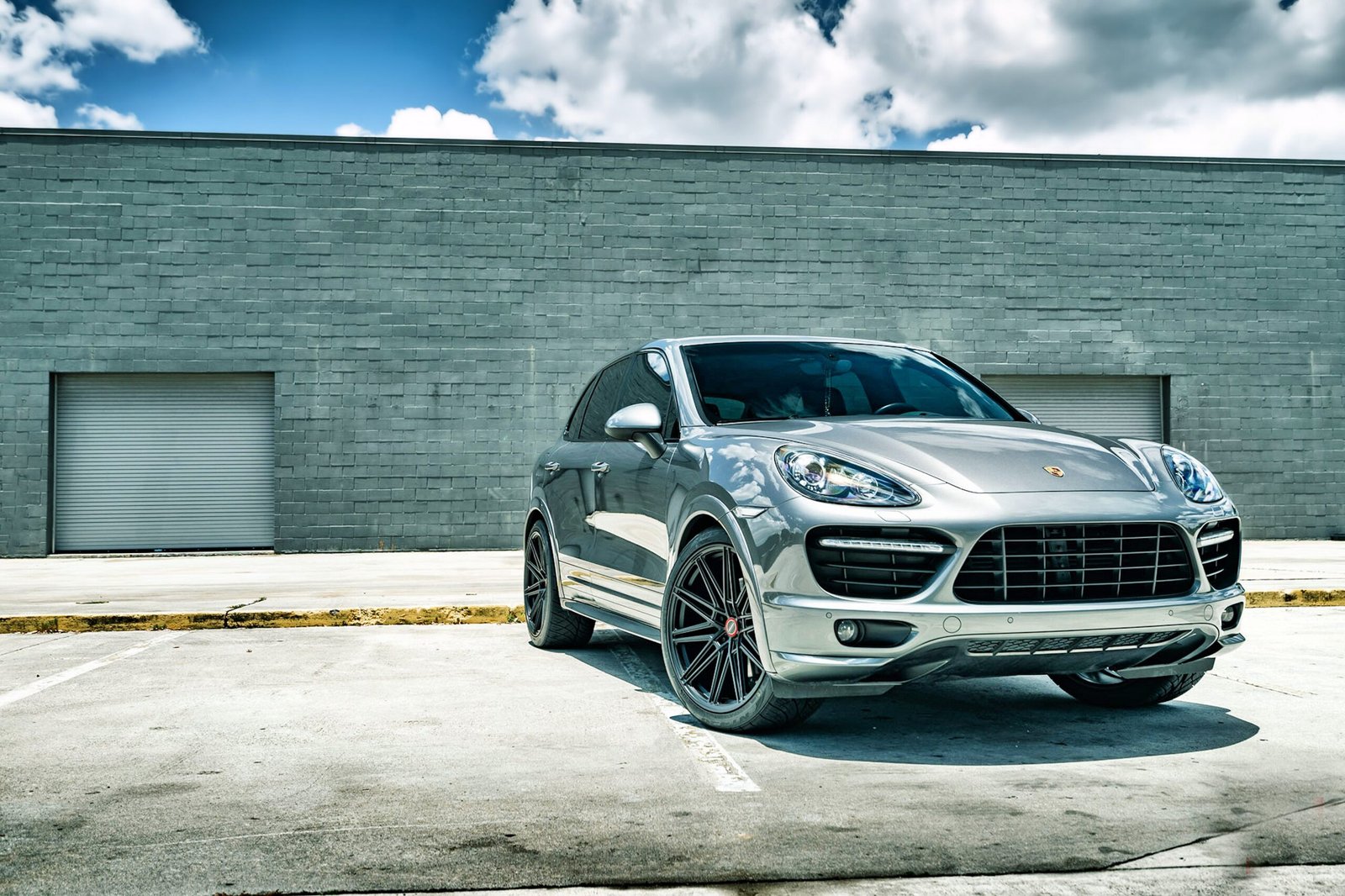
It is true that the new Porsche Cayenne Turbo E-Hybrid is such a vehicle but also it has other features that complicate the matter.
Porsche changed the third-generation Cayenne drastically for the 2024 model year. PHEV batteries go from 14.1 kWh to 25.9 kWh hence the electric range is almost doubled. The electric motor, now adding 174 horsepower (before it was 134), combined with a tweaked twin-turbo 4.0-liter V8, the Cayenne Turbo E-Hybrid is able to produce an astonishing 729 horsepower and 700 lb-ft of torque. That is more than the outgoing Turbo S E-Hybrid and any currently available combustion SUV, except the Lamborghini Urus Performante, which shares most of its components.
A Heavy Price to Pay – Both Literally and Figuratively
The 2025 Cayenne Turbo E-Hybrid, whose base price starts at $158,995, is also heavy almost as much as the price shocks. For the coupe version, Porsche quotes a curb weight of 5,719 pounds, which is nearly 700 pounds more than the non-hybrid Cayenne GTS Coupe with the same V8.
It is a ridiculous idea: a luxury SUV environmentally friendly on the surface with its hybrid powertrain but still having a twin-turbo V8 under the hood and weights more than two original Boxsters put together. Such overabundance largely defines the Porsche Cayenne Turbo E-Hybrid, which is “so much car” in every way.
Performance That Goes against the Laws of Physics
The Cayenne Turbo E-Hybrid is surprisingly nimble despite its weight. Optional rear-wheel steering and active anti-roll systems equip it, and with them, it can turn with unexpected calmness at corners. In Sport Plus mode, the suspension gets lowered, the adaptive dampers become stiffer, and the body roll disappears almost completely.
The steering, though accurate, is lighter than what one would expect for a Porsche, and one may find the rear-wheel steering below 50 mph a little weird at first. However, the newly fitted springs and dampers offer great ride comfort and sportiness even if you have chosen the optional 22-inch wheels. The big bumps hardly make their presence felt.
But the car’s mass always reveals itself when the driver steps on the brakes. Whether the driver slows down for a stop sign or comes to a complete halt, the shifting of the mass is quite noticeable. The vehicle’s braking system, which is a combination of regenerative and friction braking, is not very reliable. The carbon-ceramic rotors (a $9,070 option) make the work of smooth stopping even harder and thus, more time-consuming.
Untamed Power Meets Hybrid Intricacies
After the start, the Cayenne Turbo E-Hybrid is extremely fast. The total output of the electric motor and the V8 is what the vehicle demands and thus, makes immediate highway overtakes easy, and the acceleration from low gears is very exciting, in fact, Performance like this was only available on top-tier 911s, and thus, the V8’s bubbling, roaring, exhaust noise (made better by the $10,700 Lightweight Sport Package) is very appealing, But the hybrid mechanism has some shortcomings. The motor and engine transition most of the time smoothly, but there are a few instances of hiccups during acceleration. Also, the hybrid system is able to consume less fuel but, it doesn’t turn the Cayenne into a green vehicle.
Hybrid Efficiency: A Mixed Bag
The hybrids version of the updated Cayenne comes with an 11-kW onboard charger, which enables a full charge to be done in about 2.5 hours with a suitable installation. The EPA gives an estimate of 24 miles of electric range, but the truth is that most of the time, the real-world figures are close to 40 miles.
The hybrid system is perfect for city driving. The Cayenne is capable of driving solely in electric mode for short trips most of which are done in town thereby V8 is kept asleep unless the driver is requesting more power. Efficiency on long highway trips will rely on battery level and driving style. The 200-mile round trip with a mix of highway speeds and city traffic saw the Cayenne achieving 27 mpg with a full battery as against 22 mpg with a minimal charge.
Though these numbers are quite good for a performance SUV, the Cayenne Turbo E-Hybrid is still a case of conspicuous consumption. Its efficiency gains are not enough to neutralize its weight and intricate structure.
A Love-Hate Relationship
The Cayenne Turbo E-Hybrid is a mixture of positives and negatives from both sides. Under perfect circumstances, the vehicle is capable of providing incredible performance as well as surprising efficiency while at other times it is just an overly complicated compromise.
The base Cayenne E-Hybrid or S E-Hybrid would probably be a better choice if you want a more balanced approach, a lighter and more efficient V6 combined with the same hybrid tech. Still, you cannot help but be fascinated by the Turbo’s performance and daring character.
Final Verdict: Excess Redefined
Just like any other Porsche, the Cayenne Turbo E-Hybrid price tag is not cheap. The 2025 model is starting at $163,945 and the as-tested price of our test car is a little bit less than $200,000. Carbon-ceramic brakes, for instance, are one of the few options that you can skip but no matter how you configure it; this is an expensive SUV.
The Cayenne Turbo E-Hybrid is a roller coaster of emotions that this car puts you through: awe, laughter, and sometimes frustration. It is utterly nonsensical but also, undeniably awesome. It goes against all logic, but it’s really hard not to want one—even if you can’t quite explain why.
Posted incars
The Porsche Cayenne Turbo E-Hybrid Is Over-the-Top in Every Way

Post navigation
Previous Post
 Subaru’s Most Anticipated Car Arrives Next Year