
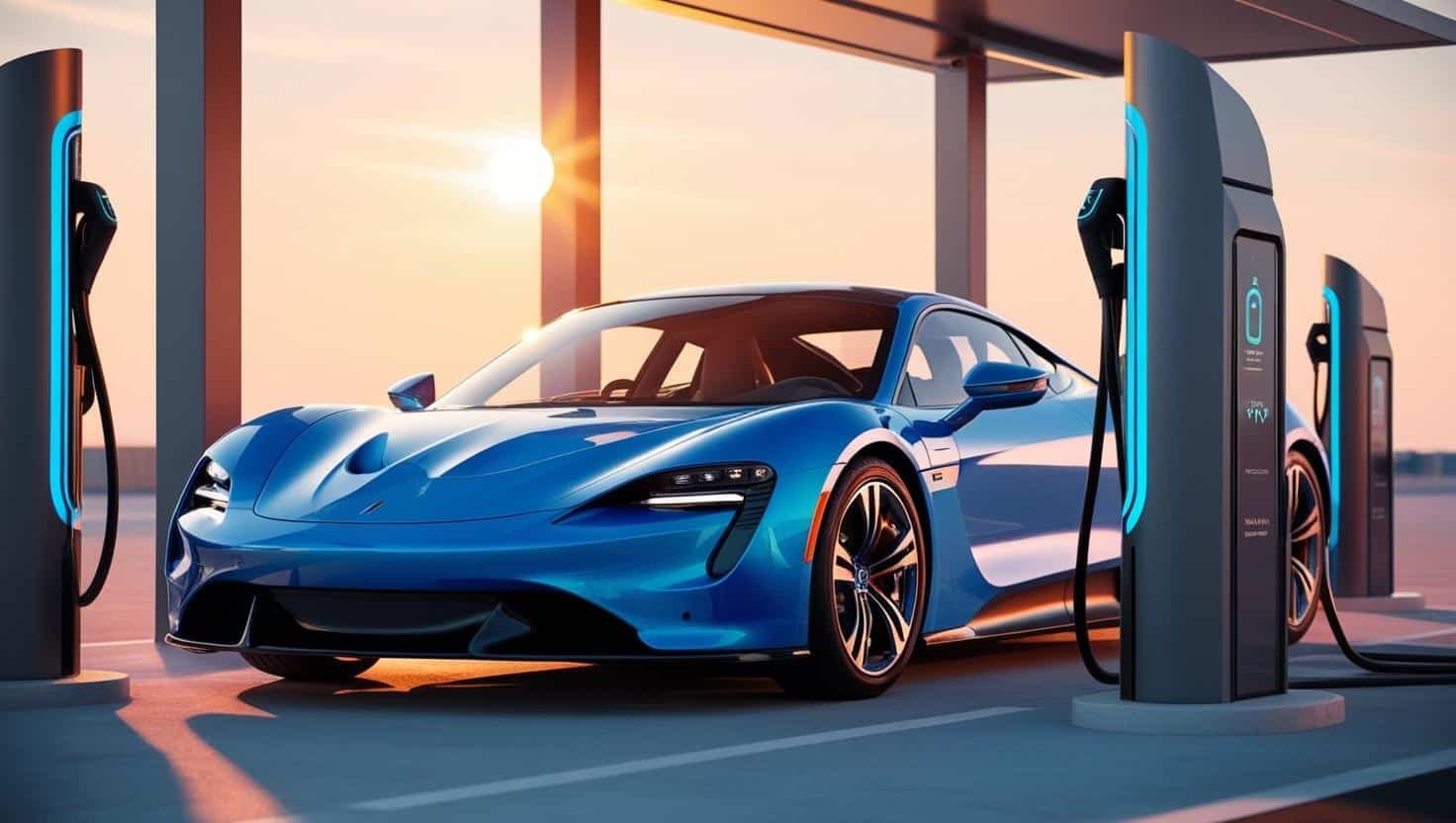
Over the past couple of years, one of the main impacts of electric cars has been their skyrocketing popularity, mainly due to environmental concerns and the technological progress made in the field of zero-emission engines. These vehicles also come with the pros and cons of any other innovations. Here, we will dissect the pluses and minuses of electric cars in a detailed manner and thus, help those who are either willing to get a new car or just want to know more.
- Advantages of Electric Cars
1.1 Reduced Environmental Impact
Zero tailpipe CO₂ emissions: e-cars are clean in a very direct way: by not emitting polluting gases right at the source. This leads to cleaner air in densely populated places.
Less noise pollution: The quietness of electric machines contributes to the lowering of noise levels in cities and thus, a more pleasant driving period is achieved.
1.2 Energy Efficiency
Higher motor efficiency: What is remarkable is that an electric motor’s energy efficiency can go beyond 90% while the same for an internal combustion engine is only about 20-40% on average.
Regenerative braking: The electric vehicles in the market today, most of them at least, come with a regenerative braking system that can thus, convert the kinetic energy into electrical energy which leads to battery charging and saving of the energy source.
1.3 Lower Operating Costs
Savings on “fuel”: In general, the electricity needed for a 100km drive is more affordable than the fossil fuels, the price of which are already on the rise. Moreover, some electricity rate (i.e., the off-peak tariff) can be even cheaper than what we expect.
Less wear and tear: Electric motors require less parts than an internal combustion engine thus it does less wear and tear (no oil changes, no replacement of timing belts…).
1.4 Incentives and Benefits
Government and regional incentives: Several countries and local authorities offer tax reliefs, bonuses, or eco-incentives to people buying electric cars.
Access to Limited Traffic Zones (ZTL): Electric vehicles in many urban areas can enter the districts where traffic is limited for free or at a lower price, thus, they can easily circulate in the old parts of town.
Dedicated and gratis parking: Many municipalities provide exclusively, and most of the time for free, parking spaces fully or partially electrified especially for the users of electric cars.
1.5 Driving Experience
Instant torque: The capacity of an electric motor to give maximum torque from the very beginning is what makes the vehicle very fast and the pass smooth.
High comfort: The total lack of vibrations and the very low noise of the electric motor are the reasons, without doubt, for the high comfort on board.
- Disadvantages of Electric Cars
2.1 Limited Range
Shorter driving distances: To be fair, the majority of electric cars can only travel a maximum of 500 km per charge, with most models offering between 200 and 300 km, compared to that of traditional cars that can cover much longer distances with a full tank.
Being exposed to temperature changes: Extremely low or high temperatures can lower the battery’s efficiency, and as such, the driving range of the electric car will be reduced.
2.2 Charging Infrastructure
Partial network of charging stations: The locations of the newly installed public chargers are planned in such a way that they serve everyone evenly; however, there are still areas, mainly villages or small towns, where these chargers have not yet arrived.
Longer charging times: A complete battery recharge can take from about half an hour (for fast charging) up to over 8 hours, according to the power of the charging station or the outlet at home. So, even though charging can be done practically anytime in a whole day, the limited time to refuel traditional cars which is only a few minutes makes the electric car less handy.
2.3 Higher Purchase Cost
Initial prices are more: Normally electric cars are more expensive than pure gasoline or diesel models of the same class in terms of initial purchase. But, gradually, thanks to economies of scale and government incentives, the prices are falling.
Resale value: It is still not clear how the second-hand electric vehicles market will develop, which in turn can have negative impacts on the long-term resale values.
2.4 Battery Production and Disposal
Impact on nature of batteries: The manufacturing of batteries takes in the process, the required extraction of raw materials (lithium, cobalt, nickel) from areas that may pose not only environmental but also social problems due to mining.
Recycling and end of life: In order to got rid of batteries, you need a certain type of process and a specific location for it. When not handled properly, these types of waste may become a real issue in the future.
2.5 Energy Supply
Dependence on the electric grid: Actually, the eco-friendliness of electric vehicles really depends on where the electricity used for charging is coming from. If it is produced by burning fossil fuels, then the clean environmental impact is a little bit less.
Possible power shortages: The larger number of electric vehicles that are being purchased can be the reason for the high demand for the electric supply that may lead to difficulties and challenges in the management and extension of the power grid.
- Additional Considerations
3.1 Technological Developments
The one aspect that keeps the producers and buyers of batteries constantly on their toes is the ever-changing research of battery science. In the upcoming years, it is not impossible that this field could be completely changed by innovations like solid-state batteries or some new, even more efficient, battery chemistries, allowing the users to have longer ranges and faster charging times.
3.2 Operating Costs and TCO (Total Cost of Ownership)
Even if the first purchase of an electric car might be pretty expensive, the total cost of ownership may turn out to be quite beneficial after a certain period due to the following reasons:
In some places it is possible to have less or no car tax.
The cost of electricity is lower than that of fossil fuels.
Maintenance costs are lower.
3.3 Future Regulations and Policies
Many countries are setting up the end of the road for new cars with internal combustion engines (ICE) sales and at the same time are launching different initiatives to facilitate the transition to electric mobility. This international movement might speed up the implementation of the charging infrastructures and at the same time make electric vehicles even more competitiv
- Conclusion
One of the least desirable (because of the environment, technology, and politics) issues is being solved more and more by electric cars, the most visible advantages being that there are no emissions from the exhaust pipe, that the operating costs are lower, and that the driving is smooth and quiet. On the contrary, their still-limited range, uneven charging infrastructure, and higher purchase cost are stumbling blocks for their widespread use.
With technology progressing and charging stations becoming more and more available, a lot of these drawbacks are going away or will be surmounted soon. It is still very important to check your personal mobility needs and available charging options (at home or public charging stations) as well as the overall costs over time before purchasing an electric vehicle. In fact, opting for an electric car might be the right choice for those who want to lower the pollution without compromising on comfort and technological innovation.